
Construction site safety regulations require strict compliance with a set of protocols to safeguard workers' well-being and avoid serious administrative penalties.
Ensuring safety in the construction sector looks like a standardised procedure, but day-to-day non-compliance arises from a lack of documentary control and real-time supervision. Failing to hand over Personal Protective Equipment (PPE) or omitting the clock-in of subcontracted staff can lead to fines above €40,000 under Spain's Law on Infringements and Penalties in the Social Order (LISOS).
This guide explains how to apply the current legal framework, draft a rigorous safety plan, and automate documentary control to avoid criminal and administrative liability. You can find more detail on preventive coordination in our article on documentary management on construction sites.
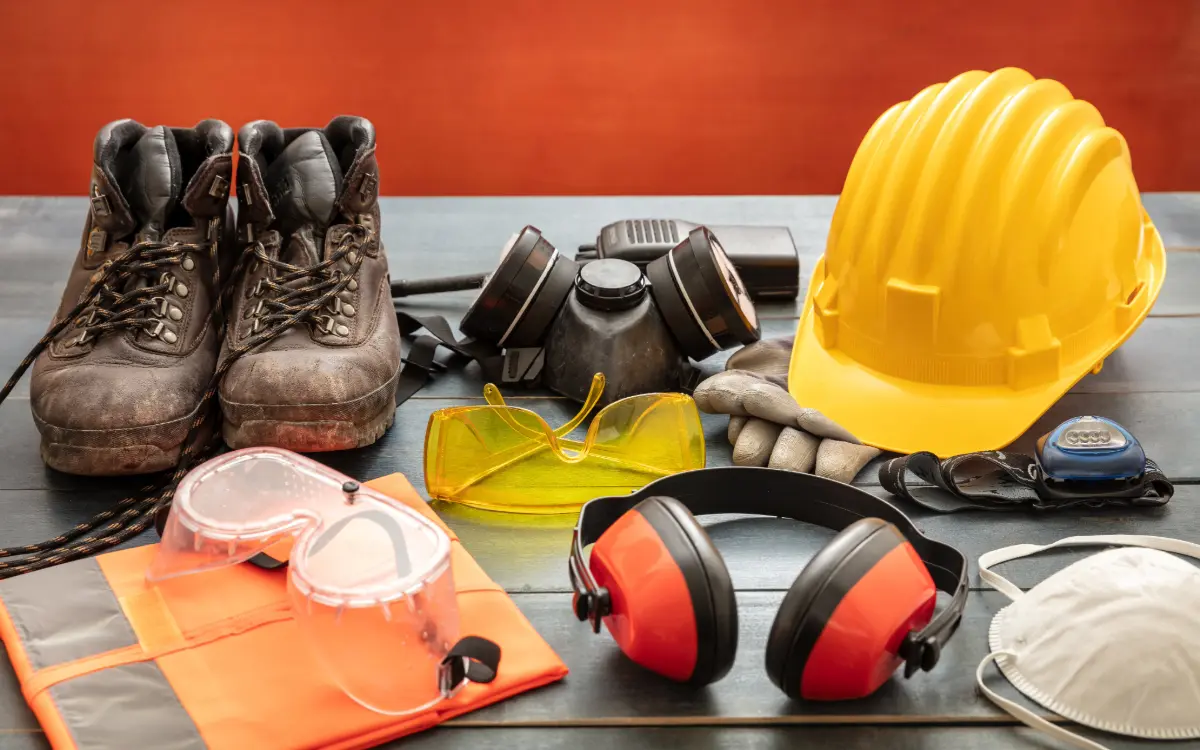
Legal framework for safety in the construction sector
Occupational risk prevention in building and civil engineering works is governed by a demanding, hierarchical regulatory framework. Complying with each rule is essential to the project's legal validity.
Act 31/1995 on the Prevention of Occupational Risks (LPRL)
This is the cornerstone of occupational safety in Spain. It establishes the employer's duty to protect workers from work-related risks and to integrate prevention into the company's management structure.
Royal Decree 1627/1997 on minimum safety provisions
This sets out the specific obligations for construction works. It regulates the role of the health and safety coordinator, the duty to draft the health and safety study at the project stage, and the subsequent preparation of the occupational health and safety plan by the main contractor.
Act 32/2006 regulating subcontracting
This sets limits on the subcontracting chain to prevent the deterioration of working conditions. It requires every subcontractor to be registered in the Register of Accredited Companies (REA) and to have its own organisational structure.
Mandatory safety and health documents on site
To start and run a project with full legal certainty, the construction company must rigorously manage the following technical and administrative documentation:
- Health and Safety Study or Basic Study: drafted by the competent technician during the project stage.
- Occupational Health and Safety Plan: a document adapted to the contractor's actual working methods that sets out the preventive measures.
- Opening of the workplace: a mandatory filing with the competent labour authority before work begins.
- Incident Log: kept by the health and safety coordinator to record any breaches of safety measures.
- Subcontracting Log: an up-to-date record of every company and self-employed worker involved in the works.
To streamline the collection and updating of these records, you can review how the time and site access control software works.
How to implement a safety plan on site
Rolling out prevention measures requires a structured methodology to avoid operational omissions.
Step 1: Project risk analysis. Assess the work phases and the specific risks arising from machinery, height, and demolition.
Step 2: Drafting and approval of the plan. The contractor prepares the plan based on the safety study and the coordinator's approval.
Step 3: Verifying the Register of Accredited Companies (REA). Validate each subcontractor's accreditation before authorising its entry to the site.
Step 4: Controlling PPE use and training. Check that all staff have received the specific training required by the sector agreement and the appropriate protective equipment.
Step 5: Auditing and daily monitoring. Carry out periodic inspections and update the preventive records in the management software.
You can coordinate work reports and staff assignments directly through the digital work reports module.
Coordination of business activities (CAE) and subcontracting
When several companies work in the same workplace, risk factors multiply. Coordination of Business Activities (CAE) requires the main contractor to gather, verify, and keep the preventive documentation of every subcontractor and self-employed worker.
Failing to verify medical fitness or the handover of personal protective equipment makes the contractor jointly or subsidiarily liable in the event of a workplace accident. To automate CAE compliance and simplify on-the-move management, it is advisable to rely on an all-in-one tool such as the construction project management app.
How Trowel helps
| Problem | How Trowel solves it |
|---|---|
| Delays in manually verifying the CAE documentation of subcontractors and freelancers | Trowel centralises documentary control of companies, REA accreditations, and PPE handovers in a cloud platform with automated expiry alerts via the documentary management solution |
| Difficulty ensuring only trained, authorised staff access the site | Digital access and clock-in log linked to the validity of each worker's preventive documentation in real time |
| Missing records in daily safety inspections and work reports | Work reports and incidents generated from the mobile app on site, attaching photos and reports in seconds |
| Loss of traceability in the handover of tools and protective equipment | A dedicated module to assign tools and PPE with the worker's digital signature straight from the mobile device |
You can see the technical detail of each module in Trowel Academy.
Frequently asked questions
Who is responsible for drafting the Health and Safety Plan?
The Occupational Health and Safety Plan is the sole responsibility of each main contractor. It must be prepared from the site's Health and Safety Study and approved by the safety coordinator before work begins.
What penalties apply for breaching site safety regulations?
Administrative penalties are classified as minor, serious, and very serious. Very serious infringements for missing individual or collective protection measures can reach amounts between €40,986 and €819,780, plus the possible immediate stoppage of the works.
Is the Incident Log mandatory on every site?
Yes. The Incident Log is mandatory on every site where a safety study or basic study exists. It is held by the health and safety coordinator or the project management team and kept available for the Labour Inspectorate.
What risk-prevention training does a construction worker need?
Under the General Sector Agreement for Construction, every worker must hold the basic initial training of 8 hours or the trade-specific training of 20 hours delivered by a body accredited by the Construction Labour Foundation.
Conclusion
Rigorous compliance with site safety regulations not only avoids serious financial penalties and criminal liability but is also the fundamental pillar for protecting workers' lives and safeguarding the project's operational profitability.
Digitising documentary management, access control, and the monitoring of preventive measures is the most effective way to keep a site compliant without losing hours to administrative tasks. If you want to automate safety and control across your construction company, request a free Trowel demo.
You may also be interested in
- How to draft a health and safety plan on site →
- How to manage subcontracting on site without legal risk →
- How to comply with OHS regulations on site →
Recommended reading