
Scaffold safety is a decisive factor in preventing falls from height and structural collapses during building and façade refurbishment works. This access equipment is essential for carrying out tasks at height, but it demands rigorous technical control throughout its erection, use and dismantling.
In the day-to-day running of a site, it is common to spot deficiencies such as missing ties to the façade, incomplete platforms, absent toe boards or the lack of signed assembly drawings. A failure in the stability of a scaffold structure puts the lives of operatives and the safety of pedestrians at direct risk.
To maintain impeccable scaffold safety, site management must verify the manufacturer's certifications, require the assembly plan where regulations demand it and audit its condition through periodic inspections.
In this article we review the requirements of the legal framework, the daily inspection duties and the digitalisation of the handover records. To frame the use of this equipment within the overall strategy, see our guide on site safety.
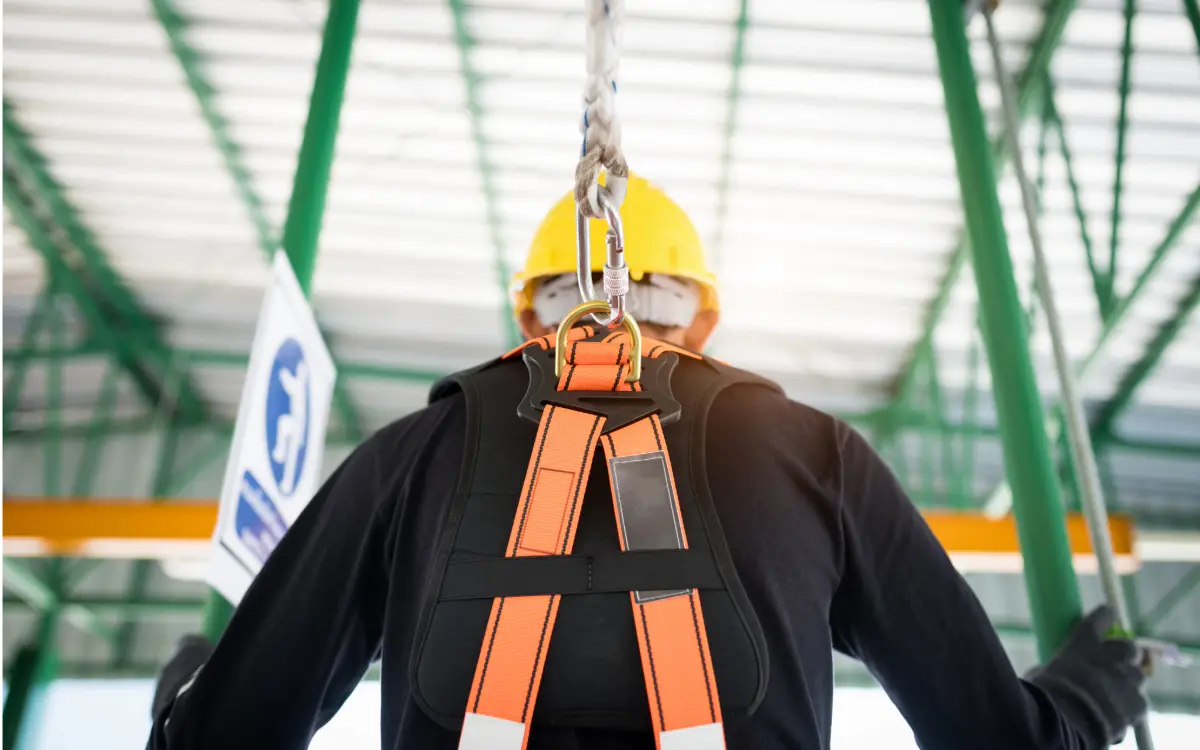
Regulatory framework and technical requirements for scaffolds
Royal Decree 2177/2004 governs the minimum safety provisions for the use of work equipment in temporary work at height, paying particular attention to tubular and suspended scaffolds.
The regulation establishes that the erection, dismantling and modification of these structures may only be carried out by trained workers and under the direction of a technically competent person.
Mandatory documentation and technical inspection
- Assembly, Use and Dismantling Plan (AUDP): Required for scaffolds over 6 metres in height or with complex structural elements.
- Calculation note: Required when the scaffold does not carry the conformity marking or its configuration does not match the manufacturer's specifications.
- Handover record: Certificate of inspection prior to use by workers, issued by the competent technician.
Essential safety elements on a scaffold
The stability and safety of a scaffold structure depend on the presence of every one of its protective components, with none omitted.
Modifying or removing tubes, diagonals or platforms to ease access without prior authorisation is strictly prohibited.
Structural protection components
- Complete work platforms: Decking of a minimum width (60 cm) with no gaps or risk of tipping, non-slip and locked in place.
- Perimeter guard rails: Made up of a top handrail (minimum 90 cm), an intermediate rail and a toe board or perimeter kick plate.
- Ties and anchors to the façade: Sufficient mechanical fixings to withstand wind loads and working weight as set out in the technical specification.
- Integrated access: Internal ladders with an access hatch to avoid climbing up the outside of the tubular structure.
Supervision and periodic scaffold inspections
A scaffold is not a static structure; the passage of time, adverse weather and continuous use degrade its elements and fixings.
The law requires periodic inspections to confirm that it retains optimal conditions of strength and stability before each working day.
Daily and weekly checks at the workface
- Daily visual inspection by the preventive resource: Coordinated by the preventive resources on site before workers climb up.
- Use of signage cards: Placement of an indicator sign (green: scaffold fit for use; red: scaffold out of service).
- Inspection after weather events: Mandatory inspection following episodes of strong winds, heavy rain or structural modifications.
- Complementary personal protection: Use of a harness clipped to independent anchor points as set out in the guide to work at height: regulations and safety measures.
Digitalising records and verifying scaffolds
Managing scaffold handovers and daily inspection sheets on paper causes disorder and makes it hard to prove the duty of vigilance to the Labour Inspectorate.
Using software for managing site safety, technicians digitally sign the handover records at street level. It also helps keep the mandatory documentation on a construction site up to date.
Step 1: Request the manufacturer's documentation and the AUDP. Upload the assembly manual and the scaffold certificate to the project cloud. Step 2: Carry out the assembly acceptance inspection. Check the anchor points, guard rails and toe boards with a site safety checklist. Step 3: Issue the digital handover record. Sign the document from the mobile app and authorise the green card for use. Step 4: Log the periodic inspections with evidence. Save photos of the ties and the structure in the daily safety reports.
How Trowel helps
| Problems | How Trowel solves it |
|---|---|
| Use of scaffolds without the corresponding certification or handover record | Use blocked until the handover record and inspection are digitally signed in the app |
| Weekly checks of stability and ties being skipped | Automatic alerts to complete the periodic checklist |
| Loss of the manufacturer's assembly specification and calculation notes | Document repository accessible from the mobile in the Health & Safety module |
You can see the technical detail of each module at Trowel Academy.
Frequently asked questions
From what scaffold height is drawing up an Assembly Plan (AUDP) mandatory?
It is mandatory to draw up an Assembly, Use and Dismantling Plan signed by a competent technician when the scaffold height exceeds 6 metres from the base.
Can scaffold ties be removed to finish off the façade?
No, ties should never be removed on an unplanned basis. If it is essential to remove them temporarily to complete a task, it must be done under technical supervision and by compensating the tie at another point.
Who must certify that a scaffold is ready to use?
The competent technician appointed to direct the assembly, or the person with suitable university or vocational training, must inspect and certify the structure by means of the handover record.
Conclusion
Complying with scaffold safety guidelines prevents accidents arising from temporary work at height and ensures a stable working environment. The combination of approved scaffolds, qualified erectors and continuous inspections is the only guarantee of safety.
Digitalising the assembly certificates and the daily checklists makes it possible to react in time to any anomaly. If you want to streamline safety management for your access equipment, request a free Trowel demo.
You may also be interested in
- Work at height: regulations and safety measures →
- Site safety checklist →
- Preventive resources on site →
- Mandatory PPE in construction →
Recommended reading