
On site, almost no serious accident is an isolated event. Behind it there is usually an unsafe act (something someone did or failed to do) or an unsafe condition (something in the environment that was wrong), and often both at once. Knowing how to tell them apart is one of the foundations of construction safety, because each is corrected differently: the act, through training and supervision; the condition, through maintenance, housekeeping and investment. The distinction is so central that the STPS classifies its statistics on occupational risks recorded by the IMSS by unsafe act as well as by physical hazard.
In this guide you will see the difference between the two with examples from site, their most common causes, how to detect them before they cause an accident, and the mistakes that let them repeat.
Why does it matter to tell unsafe acts and unsafe conditions apart?
Correctly identifying these two concepts in México makes it possible to:
- Reduce workplace accidents and occupational illness.
- Address the real causes, not just the consequences.
- Design effective prevention plans.
- Comply with STPS regulation and IMSS guidelines.
- Professionalize safety management on site, in the plant or in the field.
In sectors such as construction, this difference can be the line between a productive day and a serious accident.
What are unsafe acts?
Unsafe acts are actions or omissions by people that increase the probability of an accident.
Common examples of unsafe acts:
- Not wearing personal protective equipment (PPE).
- Operating machinery without authorization.
- Working in a rush while ignoring procedures.
- Improvising tools.
- Disabling safety devices.
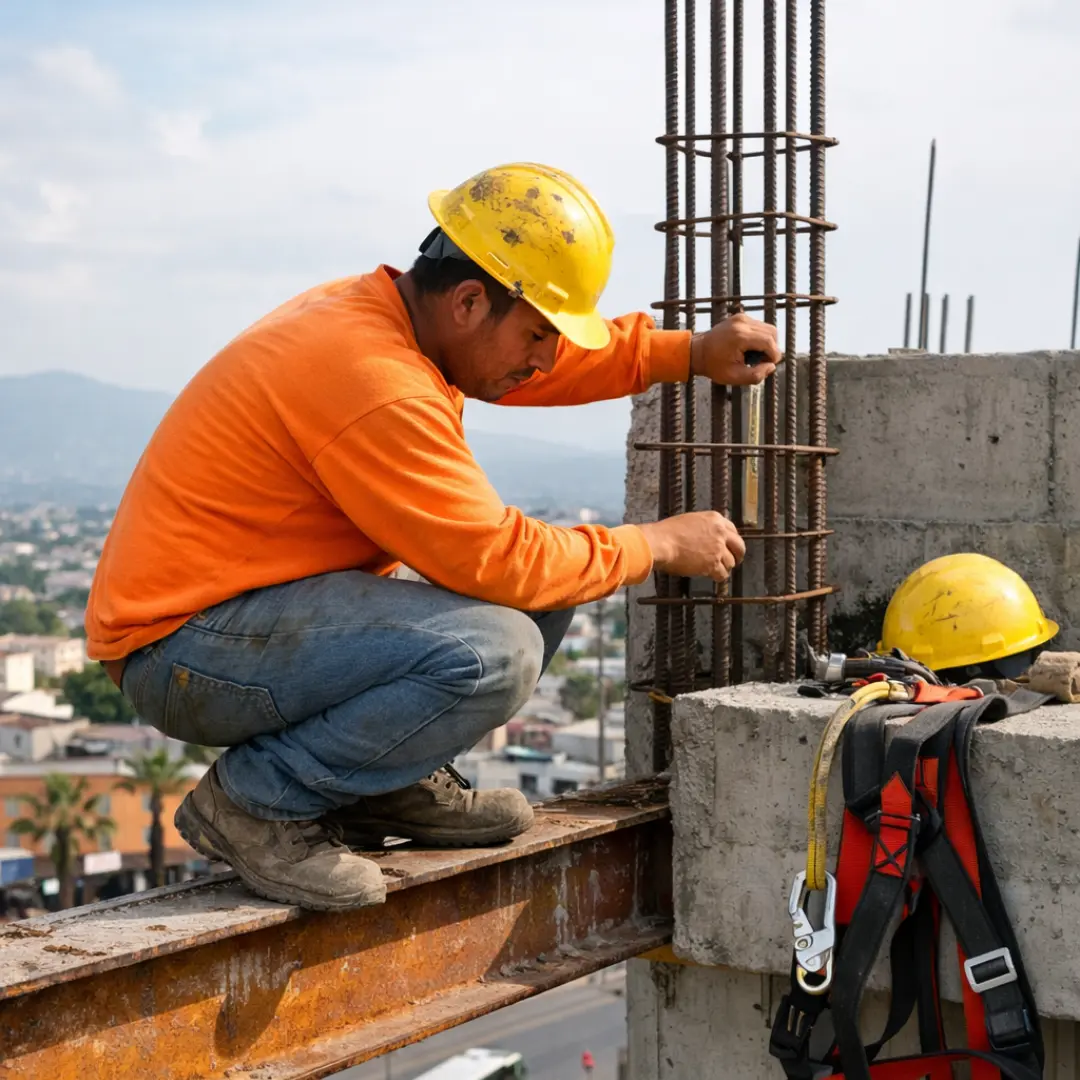
Example of an unsafe act in construction: a tradesman working at height without a harness because "it will only take a moment." That individual decision is an unsafe act, even though the equipment is available.
What are unsafe conditions?
Unsafe conditions are physical or environmental situations in the workplace that represent a hazard.
Common examples of unsafe conditions:
- Badly assembled scaffolding.
- Exposed electrical installations.
- Poor lighting.
- Slippery floors.
- Lack of signage.
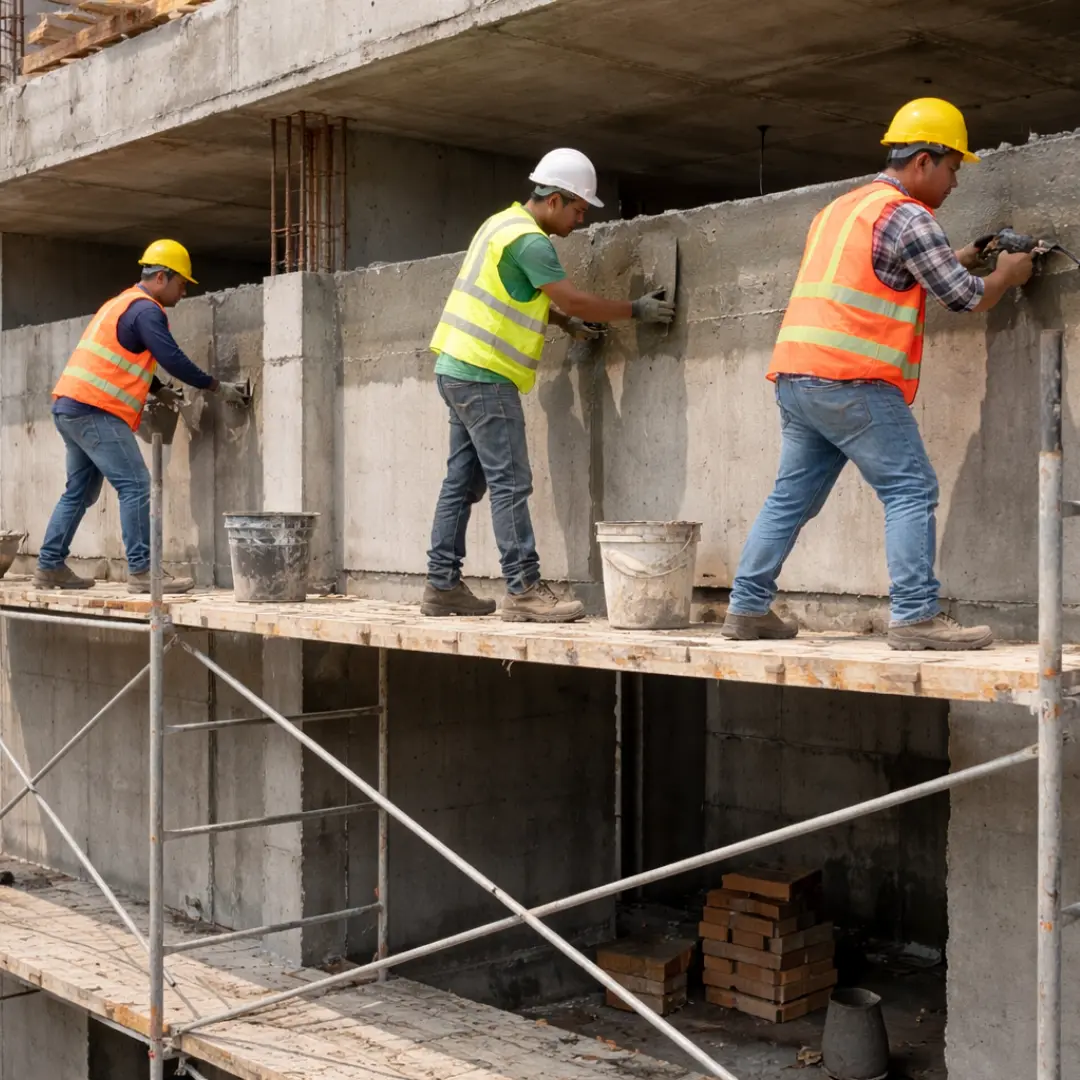
Example of an unsafe condition on site: a scaffold with no guardrails or toe boards, even when the workers are wearing hard hats.
The key difference between unsafe acts and unsafe conditions
| Unsafe acts | Unsafe conditions |
|---|---|
| Depend on human behavior | Depend on the physical environment |
| Are decisions or habits | Are structural or technical failures |
| Are corrected through training and supervision | Are corrected through maintenance and investment |
Example of an accident caused by normalizing risk on site: a crew works without a lifeline because "the slab is low." The unsafe condition (no fall protection system) and the unsafe act (the conscious decision not to wear a harness) combine to produce an accident with temporary disability. In practice, most accidents happen when the two coincide.
Root cause analysis: why do they happen?
Common causes of unsafe acts:
- Lack of meaningful training.
- Pressure to meet deadlines.
- Normalization of risk.
- Reactive rather than preventive supervision.
- A culture of "this is how we have always done it."
Common causes of unsafe conditions:
- Poor maintenance.
- Lack of regular inspections.
- Misguided cost-cutting on safety.
- Disorganized operational growth.
- Lack of digitization and control.
Methods for identifying unsafe acts and conditions
Field safety inspections. Structured walkthroughs on site or in the plant to detect visible hazards and unsafe behavior.
Planned task observations. Observing critical tasks as they are performed to detect deviations from the procedure.
Analysis of incidents and near misses. Near misses are a key source of information, and an underused one in México.
Operational checklists. Practical lists adapted to Mexican regulation and to the sector.
The regulatory framework in México
Any safety strategy has to consider, among others: the Official Mexican Standards issued by the STPS on occupational safety and health, starting with NOM-031-STPS-2011, specific to construction (we explain it in our guide to construction safety); the IMSS guidelines on occupational risk prevention; and each company's internal health and safety regulations. Complying with the standard is the minimum; managing safety actively is the real challenge.
Common mistakes when managing unsafe acts and conditions
Recording only accidents, never the acts or conditions that preceded them. When the record starts at the moment of the accident, all the information about the warning signs weeks earlier is lost.
Correcting the unsafe condition but not the act that went with it, or the other way round. Fixing the scaffold without addressing why the worker decided not to wear a harness leaves half the problem unsolved, and the accident can repeat through the other cause.
Relying on occasional inspections instead of continuous observation. A monthly inspection does not catch the unsafe condition that appeared last week and has already been exposing the team for days.
Treating each finding as an isolated case, without looking for the pattern behind it. If three different sites belonging to the same company report the same unsafe act in the same activity, it is probably not a problem of three careless people, but of a procedure or a training course that is not working on any of the three.
Frequently asked questions
What is the main difference between an unsafe act and an unsafe condition?
The unsafe act depends on a person's decision or behavior, not wearing PPE, for example, whereas the unsafe condition is a physical feature of the working environment, such as a badly assembled scaffold. Most serious accidents happen when the two coincide.
Who is responsible for identifying unsafe acts and conditions on site?
It is a shared responsibility: the employer must carry out inspections and follow up on what is found, but any worker who identifies an unsafe act or condition has an obligation to report it, under the Federal Labor Law.
How often should safety inspections be carried out on site?
No single frequency is required by regulation for every site, but the recommended practice is a structured inspection at least weekly, complemented by continuous observation while the highest-risk work is being carried out day to day.
Conclusion
Understanding and correctly distinguishing unsafe acts and unsafe conditions is one of the pillars of modern safety management in México. It is not just about complying with the STPS, it is about protecting people, projects and profitability. Book a Trowel demo and digitize the recording and follow-up of unsafe acts and conditions across your sites.